The Challenge: Obsolete Spare Parts and the Start of Reverse Engineering
Owners and enthusiasts of classic cars from the 1980s and 1990s face a major challenge: a large portion of original spare parts are no longer in production, and remaining stock has long been depleted. For many restorers, this leads to difficult compromises in quality—or the complete halt of a restoration project.
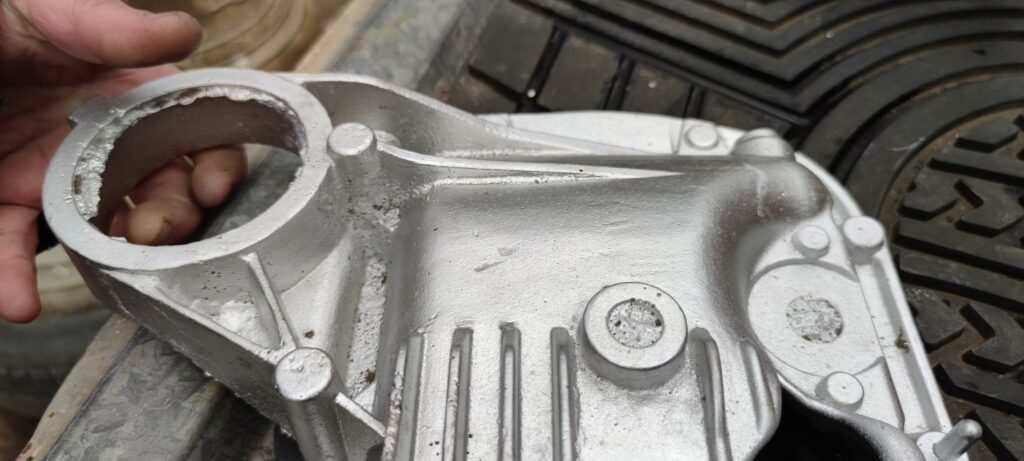
This was precisely the situation for a client who approached us seeking to restore a specific rear-wheel-drive component—a differential cover with an integrated bushing. In addition to reproducing the part, the goal was to increase its strength, as many vehicles using this type of differential are now modified or tuned, often producing several times the original torque. Under such conditions, the factory component frequently fails.
The objective was not simply to create a copy, but to deliver a reliable, dimensionally accurate, fully functional—and improved—replica that restores the original drivetrain functionality while handling increased mechanical loads.

The project began with high-precision 3D scanning of the original component. This captured the true geometry, including deformations accumulated over decades of use. The resulting point cloud served as the foundation for building a clean, production-ready CAD model, eliminating defects and enabling the development of a modernized and strengthened version of the part.
CAD Reconstruction and Production Preparation: Speed, Control, and Technical Advantage
During the CAD modeling phase, all necessary draft angles, allowances, and technological adjustments required for casting were incorporated. This ensured predictable production results and minimized the risk of manufacturing errors—critical for a client who required accuracy and repeatability.
A detailed comparison between the scanned original and the reconstructed model—after casting and CNC machining—showed near-perfect dimensional agreement. The result was a component equivalent to the original in form and function, but without its inherent weaknesses.
To increase durability, several wall sections were intentionally thickened. The original part was pressure die-cast, while the replica was produced using gravity sand casting. Since gravity casting does not achieve the same material density and strength as pressure die casting, wall thickening was necessary to compensate. Unfortunately, pressure die casting is economically unjustifiable for very small production quantities.
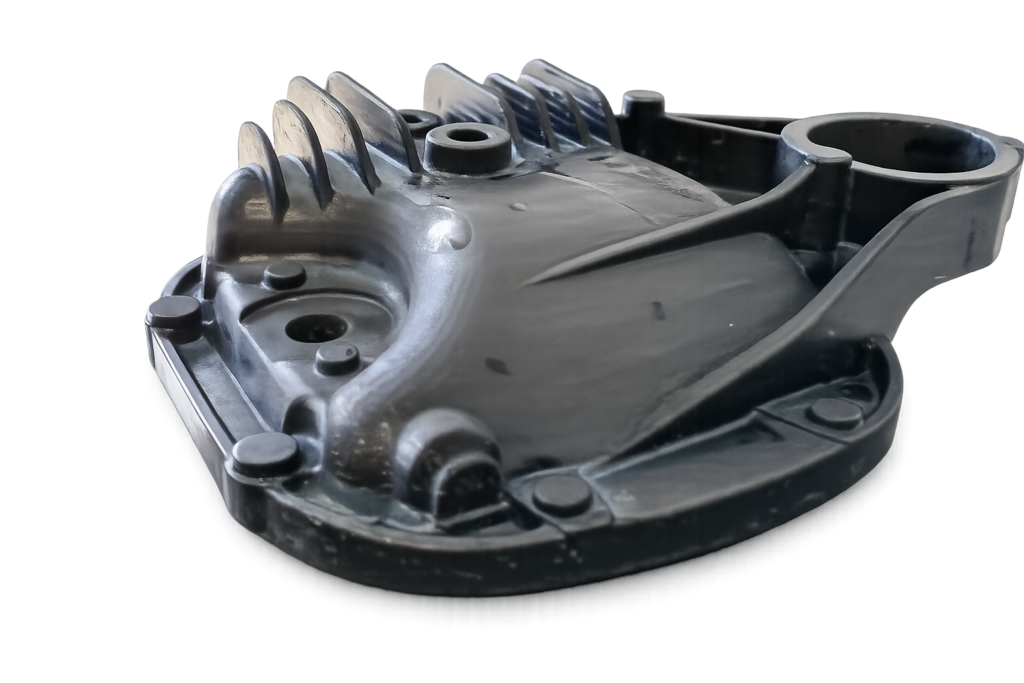
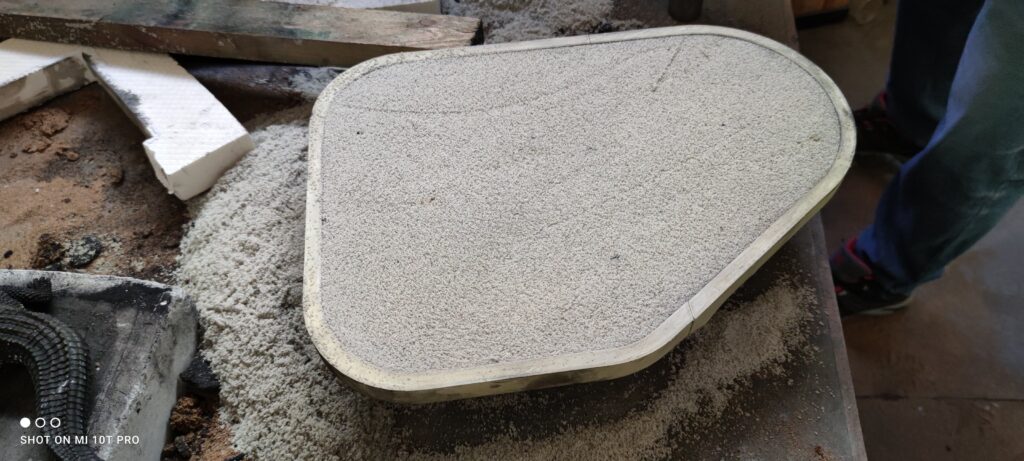
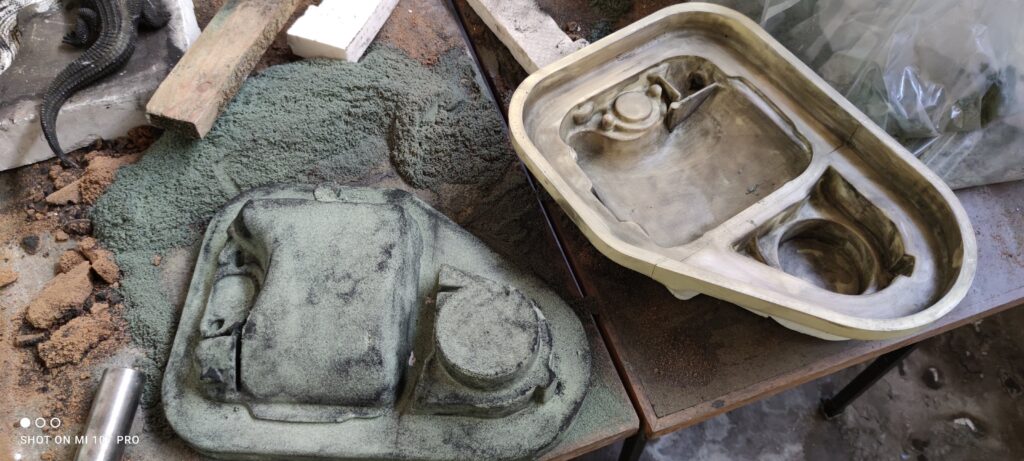
One of the strongest aspects of the project was the use of 3D printing to manufacture the casting tooling. Instead of long lead times, expensive metal molds, and high upfront costs, the client received a fast and cost-efficient solution. The photopolymer resin used for printing the casting patterns delivered excellent surface detail, while the additive approach reduced the overall production cycle by more than 60% compared to traditional tooling methods.
For business clients, this means more than cost savings—it means receiving functional components in days rather than months.
Manufacturing, Finishing, and the Business Value of Reverse Engineering
Once the tooling was completed, the component was produced using gravity casting with an aluminum alloy. This process provided a strong, lightweight part with good thermal conductivity, even though these properties do not fully match those of pressure die casting. It was conducted thermal treatment after casting in order to make a lid more durable.
Post-casting CNC machining ensured the required precision of all mating surfaces and mounting holes, achieving tolerances comparable to the original factory component. The finished part was successfully installed and performs flawlessly under real operating conditions.
Key Benefits for the Client
- Restoration of a completely unavailable component that would otherwise block the entire project.
- Optimized lead times and costs through 3D scanning and additive manufacturing
- Increased vehicle value through restoration with a component compatible with original specifications
This case study demonstrates how reverse engineering evolves from a technical process into a strategic tool—one capable of bringing vehicles back to life long after traditional production lines have disappeared.
For the client, this was more than just a replacement part. It was an opportunity to preserve a classic vehicle in an authentic, functional, and future-ready condition, capable of meeting modern performance demands while respecting its original engineering.